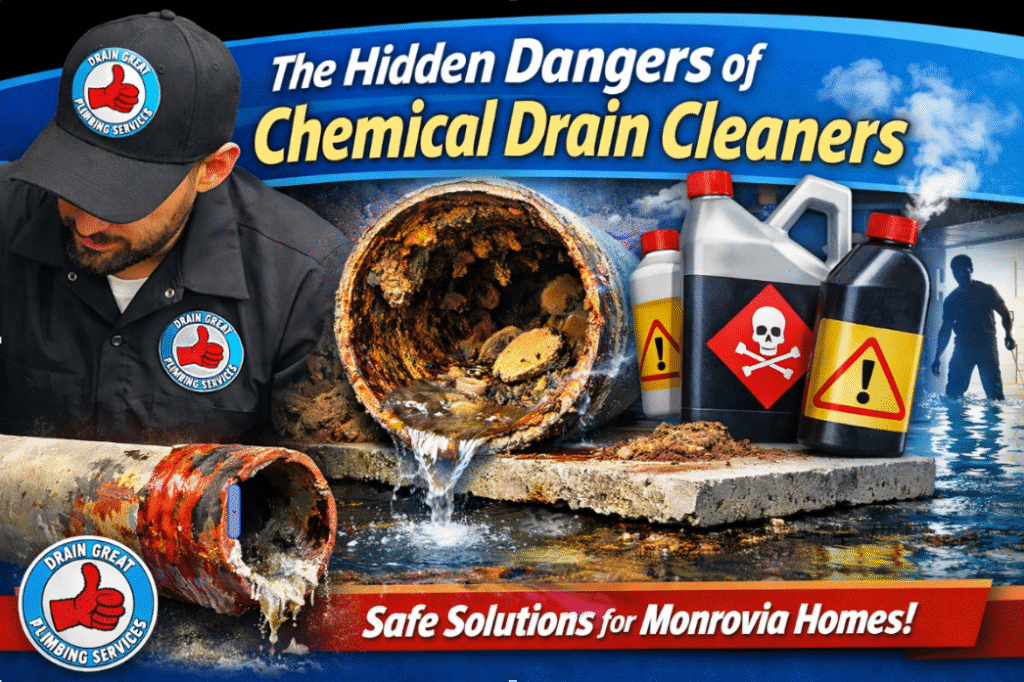
The Hidden Risk in a Common Household Shortcut
When a sink backs up or a shower starts draining slowly, many homeowners reach for chemical drain cleaners marketed as fast, inexpensive solutions. In reality, these products can cause long-term damage that far outweighs their short-term convenience. For homeowners in Monrovia, the risk is even higher. Older plumbing materials, regional water conditions, and aging infrastructure mean that harsh chemicals can silently weaken pipes from the inside out. That’s why safe drain cleaning isn’t just a best practice—it’s a necessity for protecting Monrovia homes and avoiding costly plumbing failures. Working with a trusted plumber in Monrovia can help homeowners prevent long-term drain and pipe damage before it turns into a major repair.
What’s Inside Chemical Drain Cleaners (And Why It Matters)
Most chemical drain cleaners rely on extremely aggressive ingredients designed to force a clog open through heat and corrosion—not precision or safety. Common active chemicals include lye (sodium hydroxide), sulfuric acid, and bleach-based compounds. When poured down a drain, these substances create intense chemical reactions that generate heat inside the pipe. That heat may break down soft organic material, but it also eats away at pipe walls, seals, and joints. This is the opposite of safe drain cleaning, which removes blockages without damaging the plumbing system itself.
What makes these products especially dangerous is the false sense of security they provide. “Store-bought” doesn’t mean plumbing-safe. In fact, many manufacturers openly warn that repeated use can harm pipes—but that fine print is easy to miss. Over time, the corrosion caused by these chemicals weakens pipes from the inside, often without visible signs until a leak or failure occurs.
Why Monrovia Pipes Are More at Risk Than You Think
Homes in Monrovia face a unique combination of risk factors that make chemical drain cleaners especially destructive. Many neighborhoods were built decades ago and still rely on legacy plumbing materials such as cast iron and galvanized steel, along with early PVC retrofits. These older materials are far more vulnerable to heat and corrosion. When chemical cleaners are introduced, they don’t just attack the clog—they accelerate internal pipe decay, shortening the lifespan of the entire system. Choosing safe drain cleaning methods is critical for preserving these aging pipes.
Southern California water conditions add another layer of risk. Hard water minerals naturally build up along pipe walls, narrowing the drain over time. Chemical cleaners react with this mineral scale, often creating partial clearances instead of true solutions. The result? Weakened pipes, recurring clogs, and damage that stays hidden until it turns into an expensive repair—something homeowners across Los Angeles County experience far too often.
The Real Damage Chemical Drain Cleaners Can Cause
Chemical drain cleaners don’t just “wear pipes down over time”—they can cause immediate and irreversible damage. The intense heat generated by these chemicals can thin metal pipes, eat through protective coatings, and soften or warp PVC joints. In many cases, the damage isn’t visible right away. Pipes may continue functioning while slowly leaking behind walls, under cabinets, or beneath concrete slabs. This is why plumbing professionals strongly recommend safe drain cleaning methods that clear blockages without compromising pipe integrity.
One of the most costly risks is damage to sewer lines or drain pipes located beneath slab foundations, which are common throughout Southern California. A small chemical-weakened leak under concrete can go unnoticed for months, leading to mold growth, structural concerns, and major repair bills. What started as a $10 bottle of drain cleaner can quickly turn into a multi-thousand-dollar plumbing emergency.
Why Chemical Drain Cleaners Often Make Clogs Worse
One of the biggest misconceptions about chemical drain cleaners is that they “remove” clogs. In reality, they usually burn through only the softest parts of a blockage—such as hair or soap residue—while leaving grease, food waste, and mineral buildup behind. This creates the illusion of a clear drain, but the remaining buildup quickly catches new debris. The result is a drain that clogs again, often worse than before, and requires more aggressive intervention later. This cycle is exactly what safe drain cleaning is designed to avoid.
Even more problematic, chemical cleaners can push hardened residue farther down the line, where it settles and solidifies. Over time, repeated chemical use layers this residue inside the pipe, narrowing the diameter and increasing pressure. This is why many emergency plumbing calls involve drains that were “treated” with chemicals multiple times before completely failing.
What “Safe Drain Cleaning” Actually Means
Safe drain cleaning isn’t about shortcuts—it’s about removing clogs without harming your plumbing system. Unlike chemical products, professional and plumbing-safe methods address the root cause of blockages while preserving pipe integrity. For Monrovia homeowners, safe drain cleaning means choosing solutions that work with older pipes, not against them.
Professional mechanical cleaning is the foundation of safe drain cleaning. Techniques such as drain snaking and augering physically remove debris instead of dissolving it, while hydro jetting—when appropriate—uses controlled water pressure to fully clear grease, scale, and buildup from pipe walls. These methods restore proper flow without introducing corrosive substances.
In addition, non-corrosive, plumbing-safe options play an important preventive role. Enzyme-based cleaners break down organic material gradually without heat or chemical reactions. Routine inspections and maintenance cleanings help prevent clogs before they become emergencies. When done correctly, safe drain cleaning protects pipes, extends their lifespan, and reduces the risk of costly repairs.
Signs Your Monrovia Home May Already Have Chemical Damage
Chemical damage doesn’t always announce itself with a burst pipe. In many Monrovia homes, the warning signs are subtle at first and easy to ignore. One of the most common red flags is frequent clogs in the same drain, even after repeated chemical treatments. Gurgling noises, slow drainage throughout the house, or persistent chemical odors coming from sinks and tubs can also indicate internal pipe damage.
More serious signs include unexplained water stains on walls or ceilings, damp areas near cabinets, or a sudden increase in water bills. These symptoms often point to hidden leaks caused by corrosion or weakened joints—problems commonly linked to long-term chemical drain cleaner use. Addressing these issues early with safe drain cleaning and a professional inspection can prevent extensive damage and costly repairs.
Why Local Plumbing Expertise Matters in Monrovia
Not all plumbing systems are the same, and that’s why local experience matters—especially in Monrovia. Many homes in the area feature older construction, legacy pipe materials, and slab foundations that require a careful, informed approach. A local plumbing professional understands how these factors interact and why harsh chemicals are especially risky in this environment. This local knowledge is what drives reputable plumbers to recommend safe drain cleaning methods that protect pipes instead of weakening them.
Local expertise also means familiarity with regional building codes, soil movement patterns, and common plumbing failure points throughout Southern California. Instead of relying on one-size-fits-all solutions, local plumbers tailor their approach to the specific conditions of Monrovia homes. That attention to detail helps prevent repeat issues, unexpected leaks, and unnecessary damage caused by chemical drain cleaners.
Safe Drain Cleaning Tips for Monrovia Homeowners
Homeowners in Monrovia can significantly reduce the risk of clogs and pipe damage by adopting a few proactive habits. One of the simplest steps is using drain strainers in sinks, showers, and tubs to catch hair and debris before they enter the plumbing system. Avoid pouring grease, oils, or food scraps down the drain—these materials solidify inside pipes and are one of the leading causes of recurring clogs.
Flushing drains periodically with hot water can help reduce soap residue and light buildup, especially in kitchen and bathroom sinks. Scheduling preventive professional cleanings is another key component of safe drain cleaning, particularly for older homes with aging pipes. Most importantly, never mix chemical drain cleaners. Combining products can create toxic fumes and extreme heat, posing serious safety and plumbing risks.
Protect Your Pipes Before Damage Becomes Permanent
Chemical drain cleaners may seem like an easy fix, but for many Monrovia homeowners, they’re a short-term gamble with long-term consequences. From internal pipe corrosion to hidden leaks under slab foundations, the damage often appears long after the bottle is emptied. Choosing safe drain cleaning protects your plumbing system, preserves older pipes, and helps you avoid costly repairs that could have been prevented with the right approach.
For homes throughout Monrovia and surrounding areas of Los Angeles County, proactive care matters. Before reaching for another chemical solution, consult a local plumbing professional—like Drain Great Plumbing—who understands local homes, materials, and risks. Safe drain cleaning isn’t just safer for your pipes; it’s smarter for your home and your budget.
Frequently Asked Questions About Safe Drain Cleaning in Monrovia
Are chemical drain cleaners safe for old pipes?
No. Older pipes made from cast iron, galvanized steel, or early PVC are especially vulnerable to corrosion and heat damage caused by chemical drain cleaners. Safer mechanical and non-corrosive methods are strongly recommended.
What is the safest drain cleaning method?
The safest drain cleaning methods include professional drain snaking, augering, and hydro jetting when appropriate, along with enzyme-based cleaners for maintenance. These approaches remove clogs without damaging pipes.
How often should drains be professionally cleaned in Monrovia?
For most homes, professional drain cleaning every 1–2 years is ideal. Older homes or properties with recurring clogs may benefit from more frequent preventive maintenance, especially to avoid emergency plumbing issues.