Why Water Heater Strapping Matters in Monrovia, CA
If you own a home in Monrovia, there’s a critical safety issue many homeowners overlook: water heater earthquake strapping. In a seismically active area like the San Gabriel Valley, an unsecured water heater can become one of the most dangerous hazards inside your home during even a moderate earthquake. That’s why water heater earthquake strapping Monrovia CA isn’t just a recommendation — it’s a compliance and safety issue tied directly to California building codes.
During seismic movement, a water heater can tip, slide, or completely detach from its base. When that happens, it can rupture gas lines, flood garages or utility rooms, and significantly increase the risk of fire. In Monrovia, where many homes were built before modern seismic standards were enforced, improperly secured water heaters are far more common than most homeowners realize.
California law requires residential water heaters to be properly braced, anchored, or strapped to resist horizontal displacement caused by earthquakes. Yet many homeowners assume their unit is compliant simply because it “looks secure” — when in reality, it may fail inspection or insurance review. Working with a licensed plumber in Monrovia like Drain Great Plumbing helps ensure your installation meets both state code and Los Angeles County enforcement expectations.
This guide breaks down why water heater strapping matters, what California law actually requires, and how Monrovia homeowners can protect their property, their family, and their financial liability.
Earthquake Risk in Southern California Homes
Monrovia sits within one of the most seismically active regions in the country. The city lies near several major fault systems impacting the San Gabriel Valley, including the San Andreas Fault and the Sierra Madre Fault. Even when earthquakes don’t cause visible structural damage, they frequently displace heavy appliances — and water heaters are among the first to fail.
Water heaters are tall, top-heavy, and connected to rigid gas and water lines. During lateral ground movement, an unstrapped unit can rock violently or tip over entirely. When that happens, gas lines may shear, water lines can rupture, and the tank itself can crack or detach from its platform. These failures often lead to gas leaks, interior flooding, and in worst cases, fires sparked by ignition sources in garages or utility rooms.
Older homes in Monrovia face an even higher level of risk. Many properties were built before current seismic bracing standards were enforced statewide, meaning water heaters may have never been properly upgraded. In homes with aging gas connections or outdated installation methods, even a smaller quake can result in thousands of dollars in preventable damage.
This is why water heater earthquake strapping Monrovia CA is not just a code issue — it’s a realistic risk-management step for homeowners living in Southern California’s earthquake zone.
California Legal Requirements for Water Heater Strapping
California doesn’t leave water heater safety up to homeowner discretion. Under the California Building Code and the California Plumbing Code, residential water heaters must be properly braced, anchored, or strapped to resist horizontal displacement caused by earthquakes. These requirements apply to both gas and electric tank-style water heaters installed in homes throughout Monrovia.
State code mandates that water heaters be secured with a minimum of two approved straps, typically placed in the upper and lower thirds of the tank. The straps must be anchored to wall framing or masonry capable of resisting seismic forces — not just drywall or plaster. Improvised materials or single-strap installations often fail inspection, even if the water heater appears stable.
While these are statewide codes, enforcement happens at the local level. In Monrovia, compliance is overseen through Los Angeles County building and safety standards, particularly when permits are pulled for water heater replacement, home remodeling, or real estate transactions. If a water heater is found to be non-compliant during an inspection, corrections are usually required before final approval or sale can proceed.
For homeowners, this means water heater earthquake strapping is not optional. It becomes legally enforceable during installations, upgrades, and inspections — making professional, code-accurate installation essential for long-term compliance.
What Proper Water Heater Earthquake Strapping Looks Like
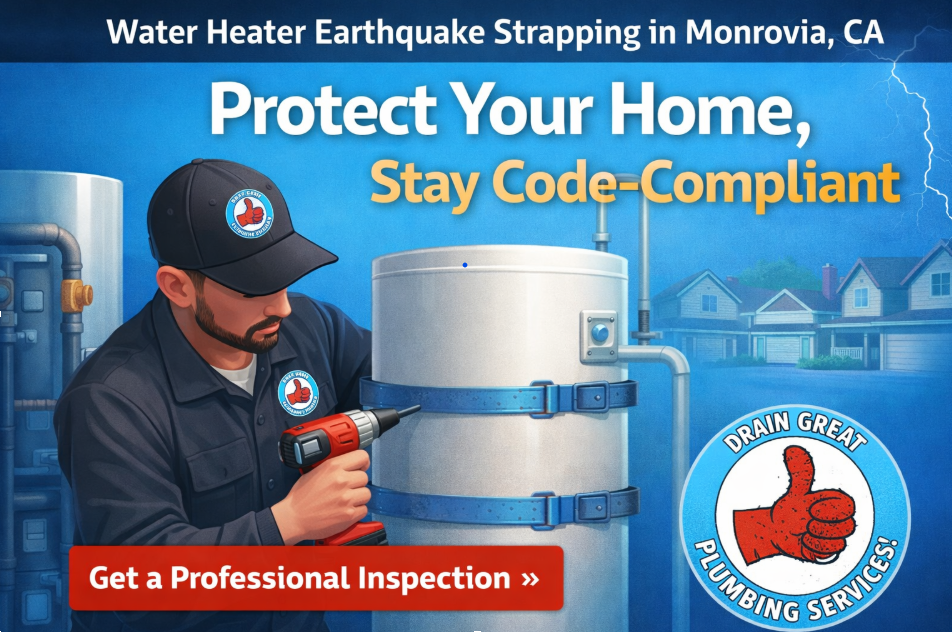
Proper water heater earthquake strapping is very specific — and it’s one of the areas where homeowners and DIY installers most often get it wrong. In California, a compliant installation requires two seismic straps: one secured in the upper third of the tank and another in the lower third. These straps work together to prevent tipping, rocking, and sliding during earthquake movement.
The straps must be made from approved metal materials, typically heavy-gauge steel designed specifically for seismic bracing. Each strap must be tightly secured to solid structural support, such as wall studs, concrete, or masonry using appropriate anchors. Attaching straps to drywall, plaster, or decorative surfaces does not meet code and will fail inspection.
Placement and tension are just as important as materials. Straps should sit snugly against the tank without slack, and spacing must allow the water heater to move slightly without breaking connections. Inspectors commonly flag installations that rely on plumber’s tape, use only one strap, or anchor into non-structural surfaces — even if the water heater appears stable under normal conditions.
A properly strapped water heater doesn’t just “stay upright.” It remains secure when lateral force is applied, protecting gas lines, water connections, and surrounding property during seismic events.
Monrovia-Specific Considerations for Water Heater Strapping
Water heater earthquake strapping in Monrovia isn’t one-size-fits-all. Local housing stock, construction age, and installation locations all affect how strapping must be done to meet code. Many Monrovia homes feature water heaters installed in garages, exterior alcoves, or narrow utility closets — each presenting different anchoring challenges.
Older homes in Monrovia often have lath-and-plaster walls, unreinforced framing, or masonry surfaces that require specialized anchors. In these cases, standard DIY kits may not provide adequate support or pass inspection. Newer builds, on the other hand, are typically designed with seismic bracing in mind but still require correct strap placement and hardware to remain compliant.
Permits and inspections are another local factor. In Monrovia, water heater replacements frequently trigger permit requirements, and inspectors may require upgrades to existing strapping before approval is granted. Multi-family properties, townhomes, and HOA-managed communities often have additional rules governing installation methods and approved materials.
Because of these variables, working with a plumber who understands Monrovia-specific construction and Los Angeles County enforcement standards helps homeowners avoid failed inspections, delays, and unnecessary rework.
How to Check If Your Water Heater Is Code-Compliant
Monrovia homeowners can perform a basic visual check to see whether their water heater is likely code-compliant — though a professional evaluation is always recommended for certainty. Start by looking for two metal straps: one positioned in the upper third of the tank and another in the lower third. Both straps should be tight, secure, and free of visible slack.
Next, check where the straps are anchored. Approved installations attach directly to wall studs, concrete, or masonry using proper anchors. If the straps disappear into drywall or plaster without visible structural support, the installation may not meet California code. Thin plumber’s tape, wire, or flexible metal bands are also common red flags.
Other warning signs include a water heater that can be rocked by hand, corroded or loose fasteners, or only a single strap securing the unit. These conditions often indicate non-compliance and increase the risk of failure during an earthquake.
If any of these issues are present — or if your home is older and the installation history is unclear — a licensed plumber can quickly confirm whether your water heater meets current water heater earthquake strapping Monrovia CA requirements.
Professional Installation vs. DIY: What Monrovia Homeowners Should Know
While some homeowners consider DIY water heater strapping, it’s important to understand where the risks begin. California code allows homeowners to perform certain minor work, but code compliance and liability remain the homeowner’s responsibility. Improper strapping — even if done with good intentions — can fail inspection or create serious safety hazards during an earthquake.
Professional installation ensures the correct materials, anchor points, and spacing are used based on the home’s construction type. Licensed plumbers also understand Los Angeles County inspection standards and can identify hidden issues, such as weakened framing or outdated gas connections, that DIY kits don’t address.
There are also insurance and liability considerations. If a water heater fails during an earthquake and causes damage, insurers may question whether the unit was properly secured. Non-compliant DIY work can complicate claims or lead to denial. In many situations — especially during water heater replacement or permitted work — using a licensed plumber isn’t just safer, it’s required.
For Monrovia homeowners, professional water heater earthquake strapping typically involves modest cost compared to the potential expense of flood damage, fire risk, or failed inspections.
Insurance, Home Sales, and Liability Implications
Proper water heater earthquake strapping doesn’t just protect your home during a quake — it can also affect insurance coverage and real estate transactions. Insurance providers often evaluate whether damage was preventable, and unsecured or improperly strapped water heaters may raise questions during a claim review after seismic activity.
During home sales in Monrovia, water heater strapping is a common inspection checkpoint. Home inspectors routinely flag missing or non-compliant straps, especially in garages. These findings can delay escrow, trigger repair negotiations, or require upgrades before a sale can move forward.
Liability is another consideration. If an improperly secured water heater causes gas leaks, flooding, or damage to neighboring units in multi-family properties, homeowners may be held financially responsible. Documented, code-compliant installation helps demonstrate due diligence and reduces exposure to disputes.
For homeowners planning to sell, refinance, or update insurance coverage, ensuring water heater earthquake strapping meets current Monrovia and California standards is a small step that can prevent major complications later.
Frequently Asked Questions About Water Heater Earthquake Strapping in Monrovia
Is water heater earthquake strapping required for all homes in Monrovia
Yes. California law requires residential water heaters to be properly strapped to resist earthquake movement. This applies to homes in Monrovia, regardless of when they were built. While older installations may be grandfathered in some situations, strapping is often enforced during replacements, inspections, or home sales.
Do tankless water heaters need earthquake strapping?
Tankless water heaters don’t require the same two-strap system as tank-style units, but they still must be securely mounted according to manufacturer specifications and seismic standards. Improper mounting can still lead to inspection issues or safety concerns.
What happens if my water heater isn’t properly strapped?
An unstrapped or improperly strapped water heater can tip over during an earthquake, causing gas leaks, flooding, or fire hazards. From a legal standpoint, it may also fail inspection, delay a home sale, or raise issues with insurance claims after a seismic event.
How long does professional water heater strapping take?
In most Monrovia homes, professional earthquake strapping can be completed in under an hour if no structural modifications are needed. More complex installations — such as older walls or masonry anchoring — may take longer.
Does strapping need to be updated when replacing a water heater?
Yes. When a water heater is replaced, existing straps are often required to be upgraded to meet current code. Old or reused straps frequently fail inspection and must be replaced during installation.
Protect Your Home & Stay Code-Compliant in Monrovia
Earthquakes can’t be predicted, but preventable damage can be avoided. Proper water heater earthquake strapping in Monrovia CA is one of the simplest and most effective ways to protect your home, reduce safety risks, and stay compliant with California law. Unfortunately, many homeowners don’t realize their water heater is improperly secured until an inspection — or an earthquake — exposes the problem.
Whether your home is older, recently purchased, or due for a water heater replacement, verifying compliance now can save you time, money, and stress later. Local code knowledge matters, and working with a plumber who understands Monrovia construction, Los Angeles County enforcement, and current seismic standards makes all the difference.
Drain Great Plumbing helps Monrovia homeowners secure water heaters correctly, pass inspections, and reduce earthquake-related risks. If you’re unsure whether your water heater meets current requirements, a professional evaluation is a smart next step toward protecting your property and your peace of mind.