Tankless vs. Tank Water Heaters for Monrovia Homes
Homeowners across Monrovia, CA are increasingly asking whether a tankless water heater in Monrovia CA makes more sense than a traditional tank system—especially with the area’s notoriously hard water. Between mineral-heavy groundwater from the San Gabriel Valley, older housing stock, rising California energy costs, and limited garage or utility space, choosing the right water heater isn’t just about preference—it’s about long-term performance and cost. Working with a Plumber in Monrovia can help you choose the right system for your home’s water quality, layout, and long-term needs.
Tankless water heaters have gained traction locally because they address many of these challenges head-on, but they’re not the right fit for every home. Understanding how each system performs in Monrovia’s specific conditions is key before deciding on installation, repair, or replacement.
Understanding Monrovia’s Hard Water Problem
Hard water is one of the most important—and often overlooked—factors affecting water heater performance in Monrovia. Supplied largely by San Gabriel Valley groundwater, local water contains elevated levels of calcium and magnesium that accelerate scale buildup inside plumbing systems. For water heaters, this mineral accumulation acts as insulation on heating surfaces, forcing systems to work harder, consume more energy, and fail sooner than they would in softer-water regions. This is why Monrovia homeowners often experience premature water heater issues compared to the national average.
How Hard Is the Water in Monrovia, CA?
Monrovia’s water typically measures in the moderately hard to very hard range, with calcium and magnesium levels high enough to cause visible scale on fixtures and inside appliances. Because much of the city relies on groundwater sources common throughout the San Gabriel Valley, mineral concentration tends to be higher than surface-water systems used elsewhere in California. This means scale buildup occurs faster inside water heaters, especially in homes without softening or scale-prevention systems.
How Hard Water Impacts Water Heaters
Hard water directly affects how long a water heater lasts and how much it costs to operate. Mineral scale collects on heating elements and heat exchangers, reducing heat transfer efficiency and driving up energy bills. As buildup worsens, systems experience longer recovery times, more frequent maintenance needs, and a significantly shortened lifespan. In Monrovia homes, this often leads to earlier-than-expected replacements—especially for traditional tank units that store heated water continuously.
Tank Water Heaters Explained (Traditional Systems)
Traditional tank water heaters are still common in Monrovia homes, particularly in older properties throughout the San Gabriel Valley. These systems store and continuously heat a set volume of water, making them familiar, straightforward, and relatively affordable upfront. However, in hard water conditions like Monrovia’s, their design makes them especially vulnerable to sediment buildup and efficiency loss over time.
How Tank Water Heaters Work
Tank water heaters heat water inside a storage tank using either gas burners or electric heating elements. In Monrovia homes, common tank sizes range from 40 to 75 gallons, depending on household size and bathroom count. Once the hot water is used, cold water refills the tank and is reheated, a cycle that continues throughout the day—regardless of whether hot water is actively being used.
Pros of Tank Water Heaters in Hard Water Areas
- Lower upfront installation cost compared to tankless systems
- Simpler design, making repairs more straightforward
- Often compatible with existing gas lines and electrical systems in older Monrovia homes
- Easier replacement when upgrading from an existing tank unit
Cons of Tank Water Heaters with Hard Water
- Faster sediment accumulation due to Monrovia’s mineral-heavy water
- Requires frequent flushing to control scale buildup
- Reduced energy efficiency as sediment insulates the tank bottom
- Shorter lifespan in hard water regions, often 8–10 years instead of the national average
- Higher long-term operating and replacement costs
Tankless Water Heaters Explained
Tankless water heaters are becoming increasingly popular in Monrovia, CA as homeowners look for long-term solutions to hard water, rising energy costs, and limited space. Unlike traditional tanks, these systems heat water on demand, which reduces many of the inefficiencies caused by storing hot water in mineral-heavy conditions. When properly sized and maintained, a tankless water heater in Monrovia CA can deliver reliable hot water while lasting significantly longer than a tank system.
How Tankless Water Heaters Work
Tankless systems use high-powered gas burners or electric heating elements to heat water instantly as it flows through a heat exchanger. In Monrovia homes, gas tankless units are often preferred due to higher flow capacity, though electric models can work well in smaller households. Their compact, wall-mounted design is especially valuable in older homes where garage and utility space is limited.
Benefits of Tankless Water Heaters in Monrovia, CA
- No standing water, which reduces sediment accumulation common in hard water areas
- Higher energy efficiency—important with California utility rates and Title 24 standards
- Unlimited hot water for multi-bath and multi-generational households
- Longer lifespan, often 15–20 years, when properly maintained
- Space-saving design ideal for compact Monrovia homes
Challenges of Tankless Systems in Hard Water
- Mineral scaling can still occur on the heat exchanger without proper maintenance
- Annual descaling is strongly recommended in Monrovia’s hard water conditions
- Higher upfront installation cost compared to tank units
- Some homes require gas line upsizing or electrical upgrades to meet demand
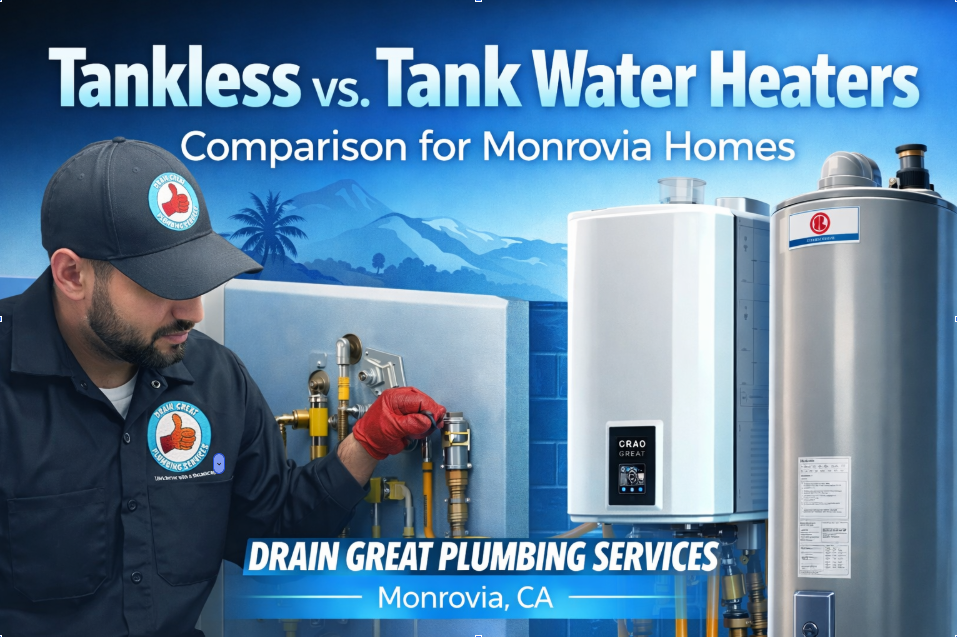
Tankless vs. Tank Water Heater Comparison for Monrovia Homes
When Monrovia homeowners compare tankless and tank water heaters, the difference often comes down to how each system handles hard water, energy efficiency, and long-term costs. Local water conditions in the San Gabriel Valley accelerate scale buildup, making performance and maintenance a critical part of the decision—not just upfront price.
Performance in Hard Water Conditions
- Tank systems: Scale settles at the bottom of the tank and on heating elements, reducing efficiency and increasing recovery time. Performance steadily declines between flushes.
- Tankless systems: No water storage means less overall sediment accumulation, but mineral scale can still coat the heat exchanger if descaling is neglected. With regular service, performance remains more consistent over time.
Energy Efficiency & Utility Costs in California
California’s energy costs and efficiency regulations make this category especially important. Tankless water heaters eliminate standby heat loss, which helps reduce monthly utility bills—an advantage under California Title 24 efficiency standards. While tank systems may appear cheaper initially, higher energy consumption often narrows that gap over time for Monrovia households.
Maintenance Requirements
- Tank water heaters: Require flushing every 6–12 months in Monrovia to remove sediment caused by hard water.
- Tankless water heaters: Require annual descaling to protect the heat exchanger and maintain efficiency.
Skipping maintenance on either system leads to faster failure in mineral-heavy water.
Lifespan & Total Cost of Ownership
In Monrovia’s hard water conditions, tank water heaters often last 8–10 years, while tankless systems can reach 15–20 years with proper care. Although tankless installation costs more upfront, fewer replacements and lower energy usage often result in a lower total cost of ownership over time.
Is a Tankless Water Heater Worth It in Monrovia, CA?
For many homeowners, installing a tankless water heater in Monrovia CA is absolutely worth it—but only when the home, usage habits, and infrastructure align. Monrovia’s hard water, combined with high California energy costs, makes efficiency and longevity especially important. Tankless systems tend to deliver the most value in households with higher hot water demand or where long-term ownership is the priority.
Best Scenarios for Tankless Installation
- Larger families or multi-bath homes with simultaneous hot water use
- Homes with frequent back-to-back showers or appliance usage
- Remodeling projects or system upgrades where gas or electrical improvements are already planned
- Eco-conscious Monrovia homeowners looking to reduce energy consumption and emissions
- Long-term homeowners seeking fewer replacements over time
When a Tank Water Heater May Still Make Sense
- Budget-focused replacements where upfront cost is the primary concern
- Smaller households with limited hot water usage
- Homes that would require extensive gas line or electrical upgrades for tankless installation
- Short-term ownership situations where long-term savings are less impactful
How to Protect Any Water Heater from Monrovia’s Hard Water
No matter which system you choose, protecting your water heater from Monrovia’s hard water is essential for performance, efficiency, and longevity. Mineral-heavy groundwater throughout the San Gabriel Valley accelerates scale buildup, but the right preventative measures can significantly reduce damage and extend the life of both tank and tankless water heaters.
Water Softening & Filtration Options
- Whole-house water softeners remove calcium and magnesium before water enters the plumbing system, offering the most comprehensive protection.
- Scale prevention or conditioning systems reduce mineral adhesion without fully softening water, often used where full softeners aren’t desired.
- For tankless systems in Monrovia, some form of scale control is strongly recommended to protect the heat exchanger and maintain manufacturer warranties.
Professional Maintenance Matters
Routine service by a licensed local plumber is critical in hard water regions like Monrovia. Manufacturers often require documented annual maintenance—especially for tankless units—to keep warranties valid. Professional flushing or descaling ensures mineral buildup is removed safely and thoroughly, helping prevent unexpected breakdowns and premature replacements.
Tankless Water Heater Installation in Monrovia, CA
Installing a tankless water heater in Monrovia CA isn’t just a mechanical upgrade—it’s a regulated construction project that must account for local permits, California energy codes, and the realities of older San Gabriel Valley homes. Proper installation directly affects efficiency, lifespan, warranty coverage, and long-term operating costs, making local expertise especially important.
Local Permits & California Code Requirements
Tankless water heater installations in Monrovia must comply with California Title 24 energy efficiency standards and local permitting requirements enforced by City of Monrovia. Depending on the system, this may include gas line sizing verification, electrical load calculations, venting upgrades, and inspection sign-off. Skipping permits or cutting corners can lead to failed inspections, denied rebates, and warranty issues.
Choosing the Right Tankless Water Heater for Your Home
Proper sizing is critical. A tankless system must be selected based on gallons-per-minute (GPM) demand, number of bathrooms, and simultaneous usage patterns. Monrovia homeowners also need to weigh gas vs. electric systems, factoring in existing infrastructure and utility costs. Well-established brands commonly installed in the area include Navien, Rinnai, Noritz, and Rheem—each offering models designed to handle hard water when maintained correctly.
Why Hire a Local Monrovia Tankless Water Heater Specialist
A local specialist understands Monrovia’s hard water conditions, permitting process, and the quirks of older San Gabriel Valley homes. This experience leads to faster installations, fewer surprises, and better long-term results. Local professionals also provide quicker warranty support, routine maintenance, and emergency service when issues arise—advantages national installers can’t always match.
FAQs About Tankless Water Heaters in Monrovia
These are the most common questions Monrovia homeowners ask when considering a tankless water heater in Monrovia CA, especially with hard water and California energy regulations in mind.
Do tankless water heaters clog faster with hard water?
They don’t clog faster than tank systems, but hard water minerals can accumulate on the heat exchanger if maintenance is skipped. In Monrovia’s hard water conditions, annual descaling prevents scale buildup and keeps performance consistent.
How often should a tankless system be descaled in Monrovia?
Most manufacturers recommend descaling once per year in hard water areas like Monrovia. Homes with very heavy usage or no water softening may benefit from more frequent service to protect efficiency and warranty coverage.
Are tankless water heaters eligible for California rebates?
Yes, many high-efficiency tankless systems qualify for California and utility-based rebates, depending on the model and installation compliance with **California Title 24
Get Expert Tankless Water Heater Help in Monrovia, CA
Choosing between a tank and a tankless water heater in Monrovia CA doesn’t have to be complicated. With Monrovia’s hard water, older homes, and strict California efficiency requirements, working with a knowledgeable local plumber makes all the difference. Professional guidance ensures your system is correctly sized, code-compliant, and protected against mineral buildup from day one.
Drain Great Plumbing provides local tankless and traditional water heater installation, repair, replacement, and maintenance, with solutions tailored specifically to Monrovia’s water conditions. Whether you’re upgrading for efficiency, replacing a failing unit, or looking for hard-water-specific protection, expert help ensures long-term performance and peace of mind.