Why Low-Flow Toilets Matter in California
California has some of the strictest water conservation laws in the country, and for good reason. Ongoing drought cycles, population growth, and aging infrastructure have made water efficiency a priority—especially inside the home. For homeowners researching low flow toilet California Monrovia CA, understanding how state regulations intersect with local plumbing realities is essential. Working with a Plumber In Monrovia can also help you choose a compliant model and avoid installation issues.
In Monrovia, older homes often still operate with toilets using 3.5 to 5.0 gallons per flush (GPF), wasting thousands of gallons of water every year. A modern low-flow toilet, by contrast, uses no more than 1.28 GPF, delivering powerful performance while dramatically reducing water use.
This guide is designed for Monrovia homeowners, landlords, and remodelers who want to stay compliant with California law, lower their water bills, and avoid common performance issues associated with outdated or poorly chosen fixtures.
Understanding California’s 1.28 GPF Toilet Law
1 What Is the 1.28 GPF Requirement?
GPF stands for gallons per flush, and it’s the single most important measurement used to determine whether a toilet complies with California plumbing code. Under current regulations, all newly installed residential toilets must use 1.28 gallons per flush or less.
To put this in perspective:
- Older toilets (pre-1994): 3.5–5.0 GPF
- Transitional models: 1.6 GPF
- Modern high-efficiency toilets (HETs): 1.28 GPF or lower
For Monrovia homes, switching from a 3.5 GPF toilet to a 1.28 GPF model can save over 10,000 gallons of water per year per household—without reducing flushing effectiveness when the right toilet is selected.
2 When the Law Took Effect & Who It Applies To
California’s 1.28 GPF requirement became enforceable through updates to the state plumbing code and applies broadly across residential and commercial properties. In practice, the law affects:
- Bathroom remodels
- Toilet replacements
- Real estate transactions requiring compliance upgrades
- Rental property improvements
If you’re replacing a toilet in Monrovia—even as a simple swap—you’re required to install a compliant low-flow model. Local inspectors commonly verify fixture compliance during permitted work or property transfers.
3 Governing Authorities & Compliance Standards
Several agencies oversee and enforce toilet efficiency standards in California. The California Energy Commission sets statewide efficiency benchmarks, while CALGreen building standards integrate water conservation into residential construction and remodeling.
In addition, the EPA WaterSense certification plays a critical role. Toilets carrying the WaterSense label are independently tested to ensure they meet 1.28 GPF limits and maintain strong flushing performance—making them the safest choice for Monrovia homeowners concerned about clogs or repeat flushes.
Local Water Regulations in Monrovia, CA
1 Monrovia & Los Angeles County Water Conservation Rules
While California sets the baseline for toilet efficiency, enforcement and implementation often happen at the local level. In Monrovia, plumbing upgrades must align with both state code and local water conservation practices overseen by the City of Monrovia in coordination with Los Angeles County agencies.
For homeowners, this means any toilet replacement—whether part of a remodel or a standalone upgrade—must meet the 1.28 GPF requirement to pass inspection when permits are involved. Even when a permit isn’t required, installing a non-compliant toilet can create issues later during property sales, refinancing, or insurance inspections.
Monrovia closely mirrors statewide mandates, but inspectors may pay closer attention to fixture efficiency due to Southern California’s long-standing water supply constraints. Choosing a WaterSense-certified toilet significantly reduces the risk of compliance issues.
2 Rebates & Incentives for Low-Flow Toilets
Many Southern California homeowners are eligible for water-saving rebates when upgrading to high-efficiency fixtures. Programs are commonly administered through local water authorities or regional conservation partnerships connected to Los Angeles County.
While rebate availability can change year to year, Monrovia residents may find incentives for WaterSense-certified low-flow toilets, particularly when replacing older high-GPF models. These rebates often influence which toilet models make the most financial sense, narrowing choices to fixtures that meet both performance and conservation benchmarks.
Homeowners should always verify current incentives before purchasing a toilet, as eligibility may depend on the exact model number, flush rating, and installation date.
Types of Low-Flow Toilets Allowed in California
1 Gravity-Fed Low-Flow Toilets
Gravity-fed low-flow toilets are the most common and widely installed option across Monrovia and greater Los Angeles County. These toilets rely on tank-stored water and gravity—not pressure—to move waste through the bowl, making them quieter, easier to maintain, and compatible with most residential plumbing systems.
Modern gravity-fed models that meet the 1.28 GPF California standard have improved trapway design and bowl geometry, eliminating many of the performance issues associated with early low-flow toilets. For the majority of Monrovia homes—especially single-family residences—this style offers the best balance of water efficiency, reliability, and cost.
2 Pressure-Assisted Toilets
Pressure-assisted toilets use compressed air within a sealed tank to generate a powerful flush while still complying with the 1.28 GPF limit. These systems excel in homes with larger households or frequent use, where consistent, forceful flushing is a priority.
However, pressure-assisted toilets are typically louder and more expensive than gravity-fed models. In Monrovia, they’re often installed in master bathrooms or rental properties where performance outweighs noise considerations. A professional plumber can help determine whether your existing plumbing is suitable for this system.
3 Dual-Flush Toilets (0.8 / 1.28 GPF)
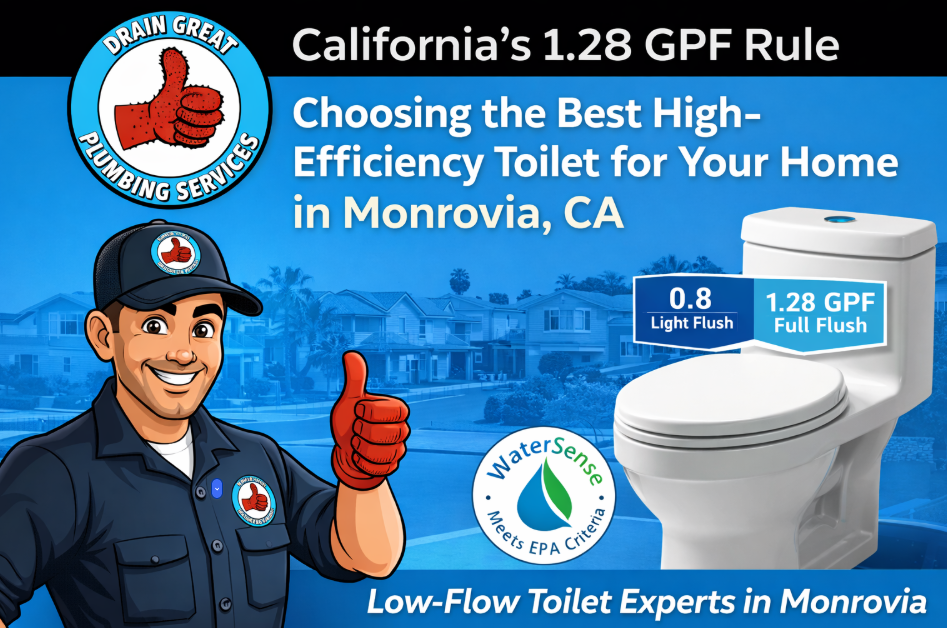
Dual-flush toilets offer two flushing options: a lighter 0.8 GPF flush for liquid waste and a full 1.28 GPF flush for solid waste. When properly certified, these toilets are fully compliant with California plumbing code and can deliver meaningful water savings over time.
For Monrovia homeowners focused on long-term efficiency, dual-flush models are attractive—but only when they carry recognized efficiency certifications. Poorly designed or uncertified dual-flush toilets can cause repeat flushing, undermining water savings and user satisfaction.
How to Choose the Best High-Efficiency Toilet for Your Home
1 Performance vs. Water Savings
One of the biggest concerns Monrovia homeowners have about low-flow toilets is performance. Early models earned a bad reputation for weak flushing, but today’s high-efficiency toilets are engineered very differently. A key metric to look for is the MaP (Maximum Performance) score, which measures how much solid waste a toilet can remove in a single flush.
High-quality 1.28 GPF toilets regularly achieve MaP scores of 800–1,000 grams, far exceeding real-world household needs. In practice, this means you can achieve excellent flushing performance and comply with California water efficiency laws—without double flushing or clogging issues.
2 Bathroom Size, Rough-In, and Plumbing Compatibility
Before selecting a toilet, it’s critical to confirm your bathroom’s rough-in measurement—the distance from the wall to the center of the drain flange. Most Monrovia homes use a 12-inch rough-in, but older properties may have 10-inch or non-standard configurations.
Plumbing compatibility also matters. Homes built decades ago may have aging drain lines or venting layouts that perform better with certain bowl designs. A local plumber familiar with Monrovia’s housing stock can help avoid installation issues that aren’t obvious on the showroom floor.
3 Comfort, Height & ADA Considerations
Comfort height toilets—typically 17 to 19 inches from floor to seat—are increasingly popular in Monrovia homes, especially for aging-in-place remodels. These models reduce strain on knees and joints while still complying with California’s 1.28 GPF requirement.
For households with mobility concerns, ADA-compliant toilets offer added accessibility without sacrificing water efficiency. Choosing the right height and bowl shape ensures the toilet works for everyone in the home, not just meets code.
Best Low-Flow Toilets for California Homes (Buying Guide)
1 Top-Rated WaterSense Toilets for Monrovia Homes
When shopping for a low-flow toilet in Monrovia, the safest way to narrow your options is to start with WaterSense-certified models. Toilets that carry the EPA WaterSense label are independently tested to ensure they meet the 1.28 GPF requirement and deliver reliable flushing performance.
Top-rated models typically share a few key traits:
- Strong MaP scores (800+ grams)
- Glazed trapways to reduce clogs
- Durable flush valves and seals
- Manufacturer warranties that support long-term use
These toilets consistently meet California code requirements while performing well in real-world Monrovia households, including older homes with legacy plumbing systems.
2 Common Mistakes When Buying a Low-Flow Toilet
One of the most common mistakes homeowners make is choosing a toilet based on price alone. Non-certified or poorly designed low-flow toilets may technically meet GPF limits but often lead to clogs, repeat flushing, or early component failure.
Other frequent issues include:
- Ignoring rough-in measurements
- Overlooking local plumbing conditions
- Buying online models not approved for California code
Working with a local plumber helps avoid these pitfalls and ensures the toilet you choose is both compliant and reliable for Monrovia’s specific housing conditions.
Installation & Replacement Considerations in Monrovia, CA
1 Do You Need a Permit to Replace a Toilet?
In many cases, a straightforward toilet replacement in Monrovia does not require a permit. However, permits are typically required when the replacement is part of a larger bathroom remodel or when drain, vent, or supply lines are modified.
Even when a permit isn’t required, inspectors may still review fixture compliance during future work or real estate transactions. Installing a non-compliant toilet today can create delays and added costs later.
2 Professional Installation vs. DIY
While DIY installation may seem straightforward, improper toilet installation can lead to leaks, sewer gas odors, or recurring clogs. Local plumbers understand California’s plumbing code nuances, proper flange height, and wax seal placement—details that directly affect long-term performance.
For Monrovia homeowners, professional installation often means fewer call-backs, smoother inspections, and peace of mind that the toilet meets all efficiency and safety standards.
3 Disposal of Old High-Flow Toilets
Old high-flow toilets shouldn’t be dumped illegally or left curbside. Many California municipalities offer approved disposal or recycling programs to keep porcelain out of landfills. Some water agencies even require proof of proper disposal when issuing rebates.
A licensed plumber can handle removal and disposal correctly, ensuring compliance with local regulations while simplifying the upgrade process.
Water Savings, Cost Savings & Environmental Impact
1 How Much Water Can You Save Annually?
Upgrading to a low-flow toilet has a measurable impact on household water usage—especially in California. The average Monrovia household flushes a toilet 4–5 times per person per day. When you replace a 3.5 GPF toilet with a 1.28 GPF model, the annual savings can exceed 10,000 gallons of water per toilet.
Over the lifespan of a high-efficiency toilet, that translates into lower water bills, reduced strain on plumbing infrastructure, and fewer emergency restrictions during drought periods. For homes with multiple bathrooms, the savings multiply quickly.
2 Impact on Monrovia’s Local Water Supply
Water conservation isn’t just a personal cost-saving measure in Monrovia—it’s a community responsibility. Southern California relies heavily on imported water, making local conservation efforts essential for long-term resilience.
By upgrading to compliant low-flow toilets, Monrovia homeowners help reduce peak demand, support drought preparedness, and lessen the burden on regional water systems. Small upgrades at the household level collectively play a major role in protecting the city’s water supply during dry years.
FAQs: Low-Flow Toilets in California & Monrovia
Are low-flow toilets required in all California homes?
Low-flow toilets are required whenever a toilet is replaced or newly installed in California. Existing high-flow toilets may remain in place, but they must be upgraded during remodels, permitted work, or certain real estate transactions.
Can I install a 1.6 GPF toilet in Monrovia?
No. Toilets rated at 1.6 GPF do not meet current California code for new installations. Monrovia homeowners must install toilets rated at 1.28 GPF or less to remain compliant.
Do low-flow toilets clog more often?
Modern low-flow toilets do not clog more often when properly selected and installed. Models with high MaP scores and WaterSense certification perform exceptionally well, even in older Monrovia homes.
Are renters or landlords responsible for upgrades?
In most cases, landlords are responsible for ensuring plumbing fixtures meet code requirements when replacements are necessary or during regulated upgrades.
How do inspectors verify GPF compliance?
Inspectors verify compliance by checking manufacturer specifications, model numbers, and certification labels—especially during permitted work or property sales.
Why Work With a Local Monrovia Plumbing Professional
When it comes to low-flow toilet upgrades, working with a local Monrovia plumbing professional makes a measurable difference. California’s plumbing code is highly specific, and local enforcement can vary based on property type, age, and scope of work. A plumber who regularly works in Monrovia understands these nuances and helps ensure your installation passes inspection the first time.
Local professionals are also familiar with older housing stock, common drain configurations, and water pressure conditions found throughout Monrovia neighborhoods. This experience reduces the risk of clogs, leaks, or repeat service calls—issues that often arise when fixtures are installed without local expertise.
For homeowners searching low flow toilet California Monrovia CA, partnering with an established local plumber provides accountability, proper licensing, and peace of mind that the work meets both state and city standards.
Making a Smart, Compliant Choice for Your Home
California’s 1.28 GPF toilet rule isn’t just a regulation—it’s an opportunity for Monrovia homeowners to reduce water waste, lower utility costs, and future-proof their homes. By choosing a high-efficiency, WaterSense-certified toilet and ensuring proper installation, you can achieve excellent performance while staying fully compliant with state and local requirements.
For older homes especially, acting proactively prevents compliance issues during remodels or property sales. Whether you’re upgrading for efficiency, comfort, or code compliance, making the right choice now delivers long-term benefits for both your household and the Monrovia community.