Why Toilet Rough-In Mistakes Are Common in Monrovia Homes
Buying a new toilet should be straightforward — but in Monrovia, it often isn’t. One of the most common (and costly) mistakes homeowners make is assuming all toilets fit the same way. They don’t. The key detail most people overlook is the toilet rough-in measurement, and getting it wrong can mean returns, delays, or even unexpected plumbing work.
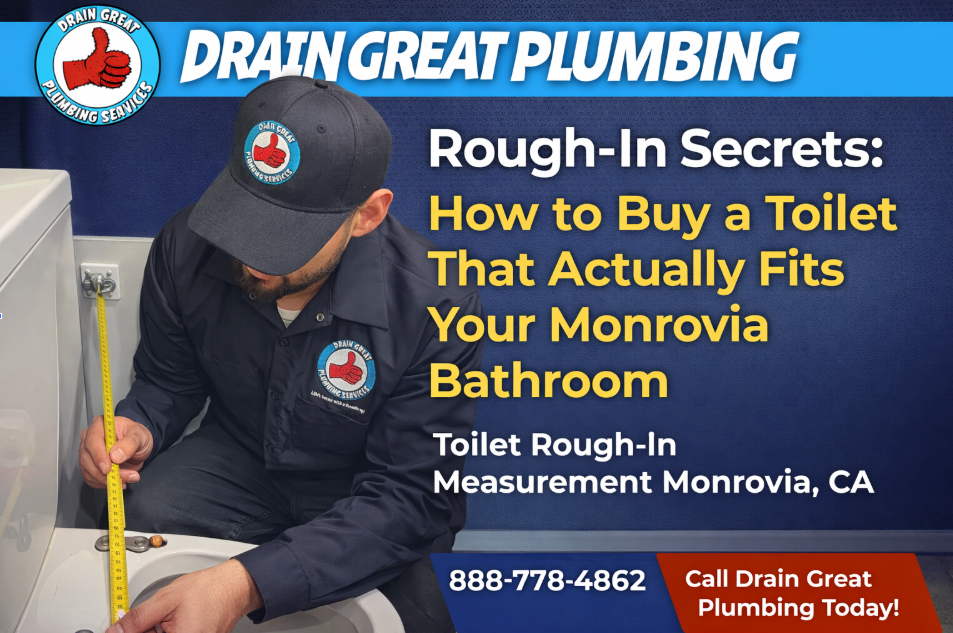
A toilet rough-in is the distance between the finished wall and the center of the toilet flange on the floor. If that measurement doesn’t match the toilet you buy, the toilet may stick too far into the room, fail inspection, or not install at all. This problem shows up frequently in Monrovia because many homes here have a mix of older construction, past remodels, and compact bathroom layouts.
If you’re preparing to replace a toilet locally, this guide will walk you through toilet rough-in measurement in Monrovia, CA, explain what sizes are common in the area, and help you know when to call a trusted Plumber In Monrovia to avoid costly sizing mistakes.
What Is a Toilet Rough-In Measurement? (Clear Definition)
A toilet rough-in measurement is the distance from the finished wall (not the baseboard) to the center of the toilet flange, which is the pipe opening bolted to the floor. This measurement determines how far the toilet sits from the wall once installed.
A common misconception is that rough-in refers to the size of the bathroom or the footprint of the toilet — it doesn’t. Two bathrooms with identical dimensions can require different toilets if their flange locations differ. We regularly see DIY installs fail because homeowners measure from the baseboard, ignore wall irregularities, or assume all modern toilets are interchangeable.
Understanding this single measurement is the foundation of choosing the right toilet for any Monrovia bathroom.
Standard Toilet Rough-In Sizes Explained
12-Inch Rough-In (Most Common in Monrovia)
A 12-inch rough-in is the most common size found in Monrovia homes, especially those built or remodeled after the 1970s. Most modern toilets sold today are designed for this measurement, making replacements relatively straightforward when the rough-in is confirmed.
In many Southern California homes, including Monrovia, this size offers the best balance between comfort, clearance, and product availability.
10-Inch Rough-In (Older & Compact Bathrooms)
A 10-inch rough-in is frequently found in older Monrovia homes and compact bathrooms where space was limited. This is where problems arise: many elongated or comfort-height toilets designed for 12” rough-ins simply won’t fit without protruding into walkways or violating clearance rules.
14-Inch Rough-In (Less Common but Critical)
A 14-inch rough-in is less common but does appear in custom homes or bathrooms that were reconfigured during remodels. Installing a standard 12” toilet on a 14” rough-in often leaves an unsightly gap between the tank and wall — a functional install, but an aesthetic disappointment.
How to Measure Your Toilet Rough-In Correctly (Step-by-Step)
Tools you’ll need: tape measure, flashlight, and a flat edge if walls are uneven.
With the toilet installed:
- Measure from the finished wall to the center of the toilet bolts at the base.
- Ignore baseboards — measure to the wall surface behind them.
- Round down to the nearest inch (11½” = 11”).
With the toilet removed:
- Measure from the finished wall to the center of the flange opening.
- Check for offset flanges, which are common in remodels.
- Inspect wall surfaces for plaster irregularities that can skew measurements.
Baseboards, uneven plaster, and shifted flanges are especially common in older Monrovia bathrooms and must be accounted for before buying a toilet.
Common Toilet Fit Problems in Monrovia Bathrooms
- Toilets extending too far into walkways
- Tanks touching or pressing against walls
- Door or vanity clearance violations
- Failed inspections due to minimum clearance issues
In Monrovia, “close enough” measurements often fail because bathrooms were built before modern spacing standards were enforced.
Local Building & Plumbing Considerations in Monrovia, CA
Toilet installations must comply with the California Plumbing Code, which specifies minimum clearances around fixtures. Inspectors pay close attention to:
- Side-to-side clearance
- Front clearance
- Flange stability and anchoring
Because Southern California is an active seismic region, flange security and earthquake resistance are especially important during replacements or relocations.
How to Choose the Right Toilet Based on Your Rough-In
Bowl Shape & Projection
Round bowls often work better in tight Monrovia bathrooms, while elongated bowls require careful projection checks.
Wall Clearance & Tank Design
Compact tanks, skirted designs, and one-piece toilets can reduce clearance issues when space is limited.
Rough-In Adapters: When They Work (and When They Don’t)
Offset adapters can help in specific cases but may reduce performance or fail code requirements if misused.
DIY vs Hiring a Local Plumber in Monrovia
Measuring is safe to DIY — but verification often saves money. The cost of buying the wrong toilet frequently exceeds the cost of professional measurement, especially in older Monrovia homes with hidden complications.
FAQs About Toilet Rough-In Measurement in Monrovia, CA
Can I replace a 10” rough-in toilet with a 12”?
Usually no, without clearance or code issues.
Do older Monrovia homes follow modern standards?
Often not — many predate current clearance rules.
What if my rough-in measures 11½”?
Always round down.
Can I move the flange instead of buying a special toilet?
Yes, but permits and code compliance may apply.
Get the Right Toilet the First Time in Monrovia
Before purchasing a toilet, professional rough-in verification can prevent costly mistakes. Drain Great Plumbing understands the construction quirks of Monrovia homes and helps homeowners choose toilets that fit correctly, meet code, and install without surprises.
When accuracy matters, local experience makes the difference.