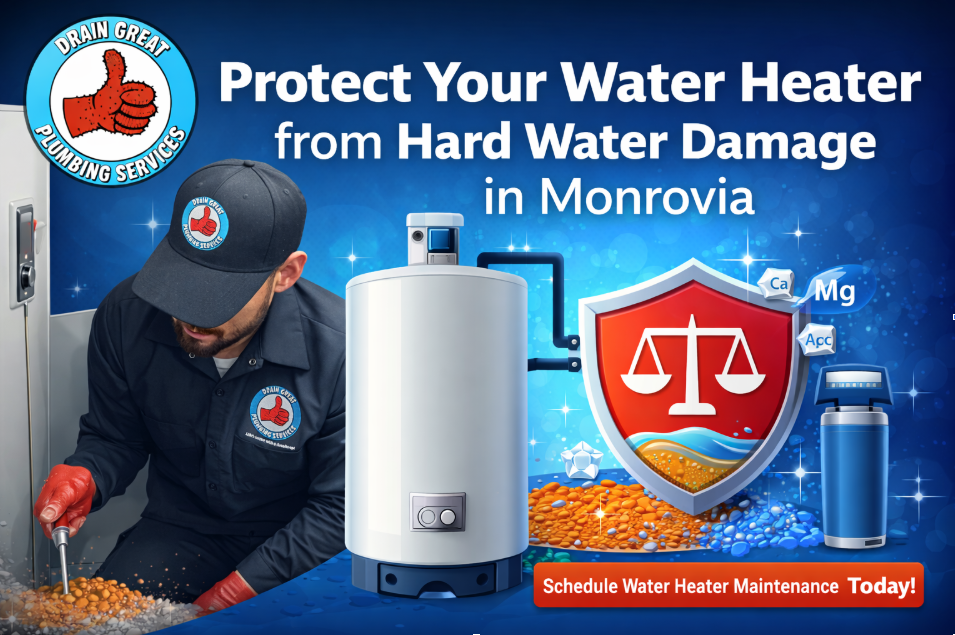
Why Water Heater Maintenance Matters in Monrovia
If you’re a homeowner in Monrovia, your water heater is working harder than you might realize. Hard water conditions common throughout the San Gabriel Valley cause mineral buildup inside water heaters, forcing systems to run less efficiently and fail years earlier than expected. That’s why water heater maintenance Monrovia CA isn’t just a preventative service — it’s a necessity for protecting your home, your comfort, and your budget.
Many Monrovia homes, especially single-family properties and older residences with legacy plumbing, are particularly vulnerable to sediment buildup. Without routine maintenance, scale accumulates inside the tank, increasing energy costs, reducing hot water output, and accelerating internal wear. Proactive water heater maintenance helps local homeowners extend system lifespan, avoid emergency breakdowns, and maintain consistent hot water year-round.
Understanding Hard Water in Monrovia, CA
Hard water is a defining factor in how plumbing systems perform throughout Monrovia. The local water supply contains elevated levels of dissolved minerals — primarily calcium and magnesium — which gradually accumulate inside pipes, fixtures, and water-using appliances. While hard water isn’t harmful to drink, it is one of the leading contributors to plumbing inefficiency and shortened water heater lifespan in Monrovia homes.
What Is Hard Water?
Hard water refers to water with a high mineral content, specifically calcium and magnesium. Unlike softened or treated water, these minerals do not dissolve completely when heated. Instead, they separate from the water and form solid deposits, commonly known as scale. Inside a water heater, this scale settles at the bottom of the tank or coats heating elements, creating long-term performance issues.
How Hard Water Affects Local Homes
In Monrovia residences — especially older single-family homes — hard water mineral buildup creates several compounding problems:
- Scale accumulation inside water heaters reduces heating efficiency
- Mineral deposits narrow pipe diameter, restricting water flow
- Appliances work longer and harder, driving up energy bills
- Plumbing components experience accelerated wear
Over time, these issues lead to more frequent service calls and earlier equipment replacement.
Signs You Have Hard Water at Home
Many homeowners don’t realize hard water is the culprit behind everyday plumbing frustrations. Common indicators include:
- White or chalky residue on faucets and showerheads
- Rumbling, popping, or cracking noises from the water heater tank
- Reduced hot water output or inconsistent temperatures
- Longer recovery times when reheating water
Recognizing these early warning signs allows Monrovia homeowners to take action before permanent damage occurs.
How Hard Water Shortens Your Water Heater’s Lifespan
Hard water doesn’t just reduce efficiency — it actively accelerates internal damage inside your water heater. In Monrovia homes, mineral-heavy water creates a chain reaction of problems that quietly shorten system lifespan, often years before homeowners expect replacement.
Sediment Buildup Inside the Tank
As hard water is heated, calcium and magnesium minerals separate and sink to the bottom of the tank. Over time, this sediment layer thickens and hardens. Instead of heating water directly, the burner or heating element must first heat through this mineral barrier.
This insulation effect forces the system to:
- Run longer heating cycles
- Consume more energy
- Experience higher internal temperatures
The result is increased stress on the tank and a significantly higher risk of overheating-related damage.
Increased Wear on Heating Elements
For electric water heaters, mineral scale coats the heating elements, preventing proper heat transfer. For gas systems, sediment buildup interferes with efficient heat distribution at the base of the tank. In both cases, components operate hotter than designed, leading to:
- Burned-out heating elements
- Frequent pilot or ignition issues
- Premature component failure
Hard water effectively turns normal daily usage into accelerated wear and tear.
Corrosion and Tank Damage
Mineral scale doesn’t just sit harmlessly inside the tank — it traps heat and moisture against the tank lining. Over time, this weakens protective coatings and speeds up corrosion. Older tanks are especially vulnerable, as worn linings combined with hard water exposure dramatically increase the risk of leaks or structural failure.
Once corrosion sets in, repair options become limited, making replacement the only safe solution.
Essential Water Heater Maintenance for Monrovia Homes
In a hard water area like Monrovia, water heater maintenance isn’t optional — it’s the difference between a system that lasts 6–8 years and one that reaches (or exceeds) its full service life. The following maintenance steps address the specific mineral-related issues that affect local homes.
Annual Tank Flushing (Critical for Hard Water Areas)
Tank flushing is the single most important maintenance task for water heaters in Monrovia. Over time, sediment settles and hardens at the bottom of the tank, reducing efficiency and causing overheating.
Annual flushing:
- Removes mineral sediment before it solidifies
- Restores proper heat transfer
- Reduces popping and rumbling noises
- Helps prevent premature tank failure
Skipping this step allows scale to accumulate faster, increasing energy costs and accelerating internal damage.
Anode Rod Inspection & Replacement
The anode rod is a sacrificial component designed to corrode instead of the tank itself. In hard water conditions, anode rods deteriorate much faster than average.
For Monrovia homes:
- Anode rods often need inspection every 1–2 years
- Replacement is commonly required sooner than manufacturer averages
- A depleted rod leaves the tank unprotected against corrosion
Timely replacement can add years to a water heater’s lifespan.
Temperature & Pressure Safety Checks
Improper temperature or pressure settings increase wear and raise safety risks. Maintenance should always include:
- Verifying optimal temperature settings for efficiency and safety
- Inspecting the temperature and pressure relief (TPR) valve
- Ensuring pressure buildup isn’t stressing the tank
These checks help prevent overheating, leaks, and valve failures.
Visual & Performance Inspections
Early warning signs are often visible — if you know what to look for. Routine inspections identify:
- Rust or moisture around fittings and the tank base
- Changes in noise levels during heating cycles
- Slower recovery times or reduced hot water capacity
Catching these issues early allows for maintenance instead of emergency replacement.
DIY Maintenance vs. Professional Water Heater Service
Many Monrovia homeowners want to be proactive about maintenance — and that’s a good thing. However, in hard water environments, it’s important to understand what you can safely handle yourself and when professional service is the smarter (and safer) choice.
What Homeowners Can Safely Do
There are a few low-risk steps homeowners can take to monitor water heater health:
- Pay attention to new or worsening noises (popping, rumbling, cracking)
- Watch for changes in hot water temperature or recovery time
- Check visible areas for moisture, corrosion, or rust
- Confirm temperature settings haven’t been accidentally raised
These observations are valuable because they help you recognize problems early — before damage becomes severe.
Why Professional Maintenance Is Recommended in Hard Water Areas
Hard water dramatically increases the complexity and risk of water heater maintenance. Professional service is strongly recommended for:
- Proper tank flushing using techniques that fully remove hardened sediment
- Safe inspection and replacement of anode rods
- Pressure and safety valve testing without risk of leaks or damage
- Identifying internal wear that isn’t visible from the exterior
Improper flushing or component handling can stir up sediment, clog valves, damage fittings, or even void manufacturer warranties. In Monrovia’s mineral-heavy water conditions, professional maintenance protects both the system and the homeowner.
How Often Should You Schedule Water Heater Maintenance in Monrovia?
In hard water regions like Monrovia, standard manufacturer recommendations often aren’t enough. Mineral-heavy water accelerates sediment buildup, meaning local homeowners typically need more frequent water heater maintenance than households in softer-water areas.
For most Monrovia homes:
- Traditional tank water heaters should be professionally serviced once per year
- Tankless water heaters often require annual or semi-annual descaling, depending on usage
Annual maintenance helps control mineral accumulation before it hardens into scale that becomes difficult — or impossible — to remove.
Factors That May Require More Frequent Service
Some households place additional demand on their water heaters. More frequent maintenance may be needed if:
- The water heater is 8+ years old
- The home has high daily hot water usage
- Hard water scale is visible on fixtures or inside appliances
- The system produces persistent noise, even after previous flushing
Older systems and heavily used units accumulate sediment faster, increasing the risk of internal damage if maintenance is delayed.
Regular scheduling ensures maintenance is proactive, not reactive — helping homeowners avoid emergency repairs and premature replacement.
Extending Water Heater Life: Preventive Upgrades & Solutions
For Monrovia homeowners dealing with hard water, maintenance alone may not be enough to fully protect a water heater over the long term. Strategic upgrades can dramatically reduce mineral-related damage, improve efficiency, and extend system lifespan.
Installing a Water Softener or Scale Reduction System
Water softeners and scale reduction systems address the problem at its source — mineral-heavy water entering your plumbing system.
Benefits include:
- Reduced sediment accumulation inside the water heater
- Improved heat transfer and efficiency
- Less wear on heating elements and internal components
- Extended lifespan for all water-using appliances
While installation requires upfront investment, many homeowners find the long-term savings outweigh the cost by delaying water heater replacement and lowering energy usage.
Choosing Hard-Water-Resistant Water Heaters
If replacement is on the horizon, selecting a unit designed to handle hard water conditions can make a significant difference. Features that perform better in Monrovia homes include:
- Enhanced anode rod protection
- Self-cleaning or sediment-resistant tank designs
- High-efficiency burners or heating elements
- Compatibility with water softening systems
Choosing the right system upfront reduces maintenance demands and improves long-term reliability in mineral-heavy environments.
Local Factors That Affect Water Heater Performance in Monrovia, CA
Water heater performance isn’t just about the unit itself — it’s heavily influenced by local conditions. In Monrovia, several regional factors combine to place additional strain on residential water heaters, making routine maintenance and smart system choices especially important.
Regional Water Mineral Levels
Local groundwater and imported water sources contain naturally high mineral content. These minerals are the root cause of sediment buildup inside tanks and scale on heating elements, directly impacting efficiency and longevity.
Climate & Year-Round Usage Patterns
Unlike colder regions with seasonal demand, Monrovia households use hot water consistently throughout the year. This constant usage accelerates wear, especially when combined with hard water exposure.
Housing Age & Plumbing Materials
Many Monrovia neighborhoods feature older homes with legacy plumbing systems. Older piping can contribute to:
- Increased sediment circulation
- Reduced flow efficiency
- Faster accumulation of mineral deposits inside water heaters
Local Utility Costs & Efficiency Importance
With rising energy costs across Southern California, inefficient water heaters cost homeowners more every month. Mineral buildup forces systems to work harder, increasing gas or electric usage and driving up utility bills.
When Maintenance Isn’t Enough: Signs You May Need Replacement
Even with proper maintenance, every water heater reaches a point where replacement becomes the safer and more cost-effective option. Recognizing these signs early helps Monrovia homeowners avoid sudden failures and water damage.
Age Benchmarks Matter
Most traditional tank water heaters last 8–12 years under ideal conditions. In hard water environments like Monrovia, lifespan often skews toward the lower end of that range — especially without consistent flushing and anode rod protection.
Persistent Noise After Flushing
If popping or rumbling noises continue even after professional flushing, it often indicates hardened sediment that can no longer be removed. This insulation layer causes overheating and signals irreversible internal damage.
Rust-Colored Water or Visible Leaks
Discolored hot water, corrosion around fittings, or moisture near the base of the tank are strong indicators that the tank lining has deteriorated. Once leaks develop, repair is no longer a safe option.
Repair Costs vs. Replacement Value
When repair costs approach 50% or more of a new unit’s price, replacement typically offers better long-term value. Newer systems provide:
- Higher energy efficiency
- Better resistance to hard water damage
- Reduced maintenance demands
At this stage, continued repairs often become a cycle rather than a solution.
Why Local Expertise Matters for Water Heater Maintenance
When it comes to water heater maintenance, local experience makes a measurable difference. Hard water conditions, housing characteristics, and code requirements vary by area, and technicians familiar with Monrovia homes are better equipped to diagnose issues accurately and recommend the right solutions.
Familiarity With Local Water Conditions
Technicians who regularly service Monrovia properties understand how aggressive mineral buildup can be in local systems. This experience allows for:
- More effective sediment removal techniques
- Accurate anode rod inspection intervals
- Better predictions of remaining system lifespan
Faster, More Accurate Diagnostics
Local expertise reduces guesswork. Instead of generic recommendations, experienced professionals can distinguish between normal wear and hard-water-related damage, helping homeowners avoid unnecessary repairs or premature replacement.
Compliance With Local Codes & Safety Standards
Water heater work must meet local safety and installation requirements. Professionals familiar with area regulations ensure:
- Proper pressure relief valve function
- Correct venting and clearance
- Safe temperature and pressure settings
This protects not only the system, but also the home and its occupants.
Call to Action: Schedule Water Heater Maintenance in Monrovia, CA
If your water heater hasn’t been serviced recently, now is the right time to act — before hard water damage turns into an unexpected failure. Routine water heater maintenance Monrovia CA helps protect your system, lower energy costs, and extend the life of one of your home’s most important appliances.
Homeowners in Monrovia benefit most from preventive maintenance scheduled before problems arise. Addressing sediment buildup, worn components, and efficiency loss early provides peace of mind and helps you avoid emergency repairs, water damage, and premature replacement.
Frequently Asked Questions About Water Heater Maintenance in Monrovia, CA
How often should I flush my water heater in Monrovia?
In hard water areas like Monrovia, tank water heaters should be flushed once per year. This prevents sediment from hardening inside the tank and helps maintain efficiency. Tankless systems may require annual or semi-annual descaling depending on usage.
Is hard water really that damaging to water heaters?
Yes. Hard water minerals settle inside the tank and on heating elements, causing overheating, efficiency loss, and accelerated corrosion. Without maintenance, hard water can shorten a water heater’s lifespan by several years.
What are the warning signs my water heater needs maintenance?
Common signs include popping or rumbling noises, reduced hot water output, longer heating times, higher energy bills, or visible scale on fixtures. These symptoms often indicate sediment buildup.
Can I flush my water heater myself?
While basic monitoring is safe for homeowners, professional flushing is recommended in hard water areas. Improper flushing can stir up sediment, damage valves, or create leaks — especially in older systems.
How long should a water heater last in Monrovia?
With proper maintenance, most tank water heaters last 8–12 years. In hard water conditions, systems without routine service often fail sooner, while well-maintained units can reach or exceed their expected lifespan.