Why Toilet Replacements Reveal Hidden Subfloor Damage
If you’re scheduling a toilet replacement in Monrovia, there’s a hidden issue many homeowners don’t expect to uncover: rotted bathroom subflooring. A simple toilet swap often exposes years of unnoticed moisture damage beneath the fixture, making bathroom subfloor repair Monrovia CA a far more common need than most residents realize. Small leaks, aging plumbing components, and older construction styles allow water to seep below the surface—quietly weakening the structure that supports your toilet and flooring.
For Monrovia homes, especially those built decades ago, toilet replacements are one of the most common moments when this concealed damage finally comes to light. Addressing it early can prevent much larger—and more expensive—bathroom repairs down the road.
What Is a Bathroom Subfloor (And Why It Matters)
The bathroom subfloor is the structural layer that sits beneath your finished flooring—tile, vinyl, or laminate—and directly supports your toilet, vanity, and foot traffic. During a toilet replacement, this layer becomes critically important because the toilet flange is anchored directly into the subfloor. If that material is weakened, no amount of resealing or tightening will create a stable installation.
In many Southern California homes, subfloors are typically made from plywood or OSB (oriented strand board) installed over wood joists, especially in raised-foundation houses. When moisture penetrates this layer—often from slow toilet leaks—it can lead to flexing, crumbling, and eventual rot. Once compromised, the subfloor can no longer properly support the toilet, causing rocking, cracked tile, and recurring leaks that worsen over time.
Common Causes of Subfloor Rot in Monrovia Bathrooms
Bathroom subfloor rot rarely comes from a single catastrophic leak. In Monrovia homes, it’s usually the result of long-term, low-visibility moisture exposure, often tied directly to toilet components that slowly fail over time. Understanding these causes helps homeowners recognize why subfloor damage is so commonly discovered during a toilet replacement.
1 Toilet-Related Water Damage
The most frequent source of subfloor rot is a compromised toilet seal or mounting system. Failed wax rings, loose or corroded toilet flanges, and slightly shifting toilets allow small amounts of water to escape with every flush. While the bathroom floor may appear dry, that moisture gets trapped beneath the toilet base—gradually saturating the subfloor until rot develops.
2 Local Housing & Climate Factors
Many Monrovia properties feature older plumbing systems and construction methods that predate modern moisture barriers. Raised-foundation homes are especially vulnerable, as water can soak into plywood subfloors from above and linger unnoticed below. Southern California’s dry climate can actually make this worse—slow leaks don’t always produce obvious surface damage, allowing rot to progress silently for years before it’s discovered.
Warning Signs of a Rotted Bathroom Subfloor
Subfloor rot isn’t always obvious until a toilet is removed—but there are warning signs that often appear beforehand. Knowing what to look for can help homeowners identify problems early and avoid more extensive bathroom subfloor repair.
1 Visible Indicators During a Toilet Swap
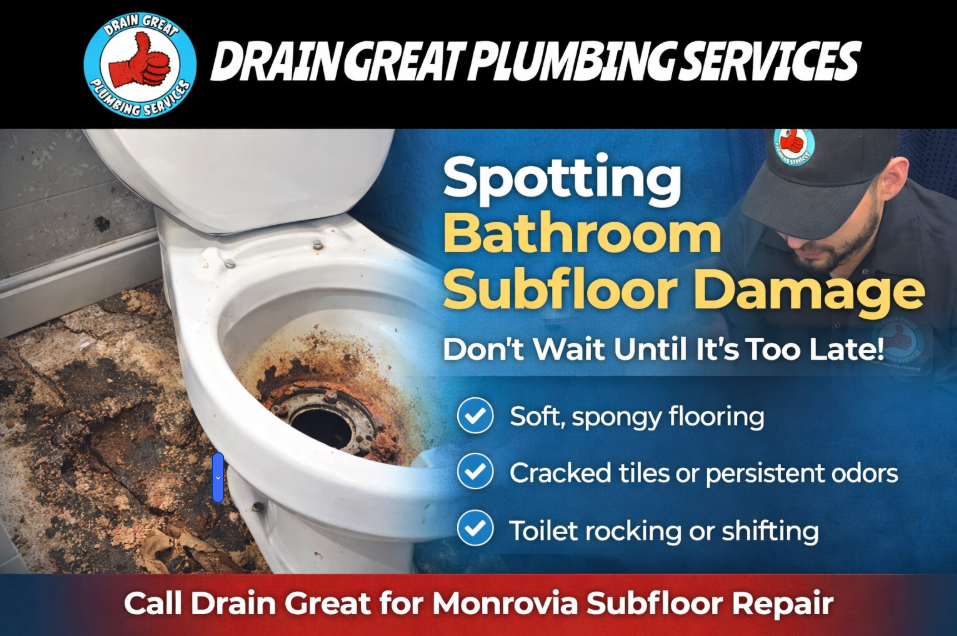
Once a toilet is lifted, clear signs of damage may be revealed. Soft or spongy flooring around the toilet opening is a major red flag, indicating prolonged moisture exposure. You may also see dark staining, mold growth, or crumbling wood around the flange area. In many cases, the toilet flange itself is rusted, loose, or no longer securely anchored, which signals that the subfloor beneath it has deteriorated.
2 Subtle Signs Homeowners Often Miss
Before removal, the clues are usually more subtle. A toilet that rocks or shifts when you sit down often points to weakened subflooring. Persistent musty odors, even after cleaning, can indicate trapped moisture below the surface. Cracked grout lines or loose tiles near the toilet base are another common warning sign that the structure underneath is no longer stable.
What Happens If Subfloor Damage Is Ignored
Ignoring subfloor damage doesn’t just affect your bathroom—it can create escalating problems throughout your home. What begins as a small soft spot beneath a toilet can quickly turn into widespread structural deterioration, as rot spreads beyond the immediate flange area and into surrounding subfloor panels or joists.
Moist, decaying wood also creates ideal conditions for mold growth, which can impact indoor air quality and raise health concerns—especially in enclosed bathroom spaces. From a financial standpoint, delaying repairs almost always increases costs. Minor, localized fixes may no longer be possible once damage expands, leading to more invasive repairs that can complicate future renovations, home inspections, or resale in the Monrovia market.
Bathroom Subfloor Repair Options in Monrovia, CA
The right repair approach depends on how far the damage has spread and what’s discovered once the toilet is removed. In many cases, early detection during a toilet swap allows for targeted repairs rather than a full rebuild—saving time, money, and disruption.
1 Minor Repairs
When rot is limited to a small area around the toilet opening, localized subfloor repairs may be sufficient. This typically involves cutting out damaged plywood, reinforcing the surrounding material, and securely resetting or replacing the toilet flange. Spot repairs work best when the structural framing beneath is still solid and moisture exposure hasn’t spread beyond the immediate area.
2 Full Subfloor Replacement
If rot extends across a larger section of the bathroom—or into joists or framing—a full subfloor replacement may be necessary. This process involves removing damaged materials, tying new subflooring into existing structural supports, and ensuring the surface is properly leveled and reinforced before the toilet is reinstalled. While more involved, full replacement ensures long-term stability and prevents recurring toilet movement or leaks.
Local Building Codes & Professional Repair Considerations
Bathroom subfloor repairs aren’t just about fixing visible damage—they must also meet local building and plumbing codes to ensure safety, durability, and resale compliance. In and around Monrovia, toilet installations are required to meet specific standards for toilet flange height, anchoring, and waste line connections. If the subfloor is uneven or deteriorated, those requirements can’t be met without proper structural repair first.
This is where working with licensed local professionals matters. Experienced plumbers understand how to rebuild subfloor sections so the toilet flange sits at the correct height relative to the finished floor and is securely fastened to solid material—not rotted wood. Code-compliant repairs help prevent failed inspections, repeat leaks, and future liability issues for homeowners.
What to Expect During a Professional Bathroom Subfloor Repair
For homeowners in Monrovia, professional bathroom subfloor repair typically follows a clear, step-by-step process designed to uncover all damage and prevent future issues. It begins with a thorough inspection, often performed once the toilet is removed, to assess moisture levels, wood integrity, and flange stability. This step determines whether the repair will be localized or more extensive.
Next, any damaged subfloor material is carefully removed, along with compromised fasteners or flanges. The area is then reinforced or rebuilt using properly rated materials, ensuring a solid, level surface. Once repairs are complete, the toilet is reset with a new seal, securely anchored, and tested for leaks and stability. Many professionals also provide prevention recommendations, such as improved sealing or periodic checks, to reduce the risk of repeat damage.
Cost Factors for Bathroom Subfloor Repair in Monrovia
The cost of bathroom subfloor repair in Monrovia, CA can vary significantly depending on several key factors discovered during a toilet replacement. One of the biggest drivers is the severity and size of the damaged area. Small, localized rot around the toilet flange is typically faster and less invasive to repair than widespread deterioration that extends across the bathroom floor.
Accessibility also plays a major role. Bathrooms with tile flooring may require careful tile removal and replacement, while raised-foundation homes may allow easier access from below. Labor and material considerations—such as reinforcing joists or installing moisture-resistant subfloor panels—can affect overall scope. In nearly every case, early detection lowers total cost, as minor repairs prevent the need for extensive reconstruction later.
Preventing Future Subfloor Damage
Once subfloor repairs are complete, prevention becomes the key to avoiding repeat damage. Proper toilet installation and sealing is critical—this includes using the correct seal, ensuring the flange is securely anchored, and confirming the toilet sits level without movement. Even slight rocking can compromise the seal over time and reintroduce moisture beneath the floor.
Routine bathroom inspections also make a difference. Periodically checking for signs of leaks, musty odors, or loose fixtures allows homeowners to catch problems early. For those planning bathroom updates, choosing moisture-resistant subfloor materials and quality flooring can provide added protection—especially in older Monrovia homes where plumbing systems may be more vulnerable.
When to Call a Bathroom Subfloor Repair Specialist in Monrovia
Some bathroom issues can be handled with basic maintenance—but subfloor damage is rarely one of them. If you notice a rocking toilet, soft flooring, recurring leaks, or persistent odors, it’s time to call a professional. These symptoms often indicate structural issues below the surface that can’t be fixed with resealing or tightening bolts alone.
During a toilet replacement, any visible rot, crumbling wood, or unstable flange is a clear signal to bring in a bathroom subfloor repair specialist. Local professionals familiar with Monrovia homes understand common construction styles, foundation types, and code requirements—allowing them to address the problem correctly the first time and prevent repeat failures.
Catching Subfloor Rot Early Saves Money and Stress
A toilet replacement may seem like a straightforward upgrade, but in many homes it becomes the moment hidden problems finally surface. Rotted or weakened subflooring is far easier—and far less expensive—to repair when it’s caught early during a toilet swap rather than after damage spreads. For homeowners searching for bathroom subfloor repair Monrovia CA, awareness is the first line of defense.
By understanding the warning signs and acting quickly, you can protect your bathroom’s structure, avoid recurring leaks, and maintain long-term stability. If you’re planning a toilet replacement or have concerns about soft flooring or movement, working with a local plumbing professional like Drain Great Plumbing ensures the job is done correctly—from the subfloor up—so you’re not revisiting the same issue months later.